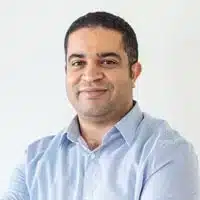
You are in charge for Supply Chain Manager with the Vaillant Group for 16 years, what have been the highlights of your professional experience?
My first professional experience was with the Candy group, and more specifically with the Rosières factories in Bourges, which specialized in household appliances. I held a Supply Chain position.
In 2001, I joined the Nantes-based Saunier Duval group (meanwhile acquired by the Vaillant group), which manufactures heating systems. I held a number of different positions, all in the Supply Chain field, including Project Manager in Procurement.
In 2004, I became the site's Supply Chain Manager. I had operational responsibility for planning, procurement and physical logistics (flow of materials within the plant, shipment of products to customers). I held this position until early 2011. I then took on other responsibilities within the Vaillant Group's corporate Supply Chain organization. In particular, I was in charge of the various factories, with a lot of travel in Europe (especially Germany), but also in China and Turkey.
Since 2017, I'm still part of the Vaillant Group's Supply Chain team. I'm now in charge of two very important key points:
- sales forecast management: I have teams working to help the sales subsidiaries refine and improve sales forecasts for our products.
- Supply Chain projects: each time a new product is launched, we have Supply Chain teams who accompany the projects to ensure that the new product reaches the market on time. We prepare the entire Supply Chain, including suppliers, to ensure that everything runs smoothly and avoids obsolescence.
I started teaching Supply Chain courses in 2006. I joined ESLI in 2011, mainly with CD09 (continuing education). Since November, I've been in charge of the Mastère 2 Logistique Sécurisée Intelligente, tutoring students and supervising GENIAL projects.
Does this position involve new challenges for you?
I think there's a continuity over time, which I'll call an overall vision. When we intervene in a school, we generally confine ourselves to the course, trying to ensure that it goes as smoothly as possible and adds value.
As an affiliated teacher, I'm discovering a lot more things, like pedagogical coordination, program design (which is strangely similar to product design, but with a specific jargon).
What's more, there's the whole tree structure between the different Campus courses to get to grips with. All these elements are a challenge, because you have to master everything. Another challenge is that there are so many people in contact at once, between the teaching team, the professors and the students. You quickly build up a network of 200 to 300 people.
Finally, my last challenge is organization, especially when I start work. You have to find a balance between all the tasks and the fact that you're only 10%. But on the other hand, my position is interesting because I have more than one foot in industry and the supply chain, so I'm able to see and master the challenges. The important thing is not to put off until tomorrow what we can do today.
Pensez-you a plus or a strength for students to be accompanied by a " expert in the field?
To find out whether this is a strong point, you'll have to ask the students in a few months' time! It would be pretentious to say that it is, but what I try to bring them is expertise in terms of methodology. When students explain their project to me, it's usually something I've already done or had done, or something very similar, and experience shows that the overall problem is the same. So that's what I try to do: teach methodology, because that's what's really important before embarking on a project or a problem. I also try not to be too hands-on or too theoretical, because that can quickly become different. You have to find a balance between fieldwork and theory!
In your opinion, what skills are essential for a logistics professional today?
To begin with, we can talk about flexibility of understanding. In Supply Chain, there are very operational issues, you have to go out into the field, do very short-term management, but also project yourself into very strategic elements, for example investments in a new logistics platform. In Supply Chain, you're constantly evolving. You have to know how to deal with the short, medium and long term at the same time.
The second thing you need to master is an understanding of all the processes and vocabulary involved in the supply chain, as there is a certain complexity involved. Next, you have to accept the vagaries that are part and parcel of a logistics director's life, such as Covid or Brexit, which will generate transport problems. Something can always happen that needs to be resolved.
Another skill to master is English. For the past 15 years, companies have been connected abroad. We need to be bilingual as quickly as possible, as we are often required to travel abroad or deal with foreign suppliers.
In your opinion, what are the main challenges facing the supply chain sector? Supply Chain in this particular context?
The first thing is that it puts Supply Chain back on a strategic level. An effective Supply Chain function has enabled some companies to fare better than others. Those who have been able to define suppliers without difficulty during this period have managed to continue producing.
The Supply Chain function is still seen as a support function, but it's actually a very strategic part of a company. With the resilience of the Supply Chain, it needs to be structured to be able to absorb costs and then recover. To be more resilient, Supply Chains need to know how to transform themselves: for example, digitalization, which will be useful to be more efficient, and to offer more solutions to customers, such as click and collect.
Then we need to master hazard prediction and improve our hazard prediction systems, but above all our weaknesses in the face of a major event, in order to make modifications.
A message for students?
It's an interesting job, because you get a 360° view of life and what's going on every day. It's important to be curious. You're going to come across a lot of things in the Supply Chain that you hear about in the news, like Brexit or Covid, which have impacts on the Supply Chain. You have a vision of the world that's just enormous. You see and discover so many things, and that's what's so interesting: it's a job that's out of the ordinary.
What's more, you meet a lot of people. You need to have a great deal of empathy to understand everyone's role and what's at stake. You also need to be a good teacher, to explain all the processes, be precise and not let yourself be thrown off balance.
Another skill that can help is the ability to draw, to illustrate explanations and ideas.